Suspension of Russian permanent mission to NATO is forced retaliatory step

Nov 11, 2021
November 11, 2021 —

PenzaNews. From November 1, Russia has suspended the work of its official mission to NATO in Brussels, and also terminated the activities of two NATO structures in Moscow – a military liaison mission and an information bureau established at the Belgian embassy.

This decision was made by the Russian authorities in response to the unfriendly policy of the North Atlantic Alliance towards Moscow. On October 6, NATO announced a reduction in the number of the Russian mission in the organization from 20 to 10 people: eight diplomats had their accreditation revoked, and two more vacancies were abolished. The alliance asked Russian diplomats to leave Brussels until the end of October. At the same time, NATO Secretary General Jens Stoltenberg said that the decision to expel diplomats was not related to specific events.

“This decision is not linked to any particular event, but we have seen over some time now, an increase in Russian malign activity, and therefore we need to be vigilant, and we need to act when we see that members of the Russian delegation to NATO conduct activities which are not in line with their [diplomatic] accreditation, and therefore the accreditation is withdrawn,” he told a news conference in Brussels after a meeting of the NATO Council.

In turn, Russian Foreign Minister Sergey Lavrov, following a meeting with participants in the 18th annual meeting of the Valdai International Discussion Club, stressed that Russia had never initiated the deterioration of relations “with NATO, the European Union, or any other Western country or any other region of the world ”and proceeds from the assumption that the North Atlantic Alliance must take the first step to improve ties with Moscow.

He recalled that the alliance countries themselves “simply ‘buried’ the basic principle that underlies the creation of the Russia-NATO council, namely, the need to urgently consult in crisis situations.”

“[...] And as concerns the attitudes to our forces response step that are voiced in NATO capitals: it was a response to three of NATO’s steps because they reduced our mission three times. And, what is more important, they don’t let us work,” the head of the Russian Foreign Ministry stated.

He also drew attention to the fact that all contacts between the military “have been cut off.”

“Then, what kind of a loss of a possibility for dialogue are we talking about? Two years ago, our Chief of General Staff Valery Gerasimov suggested drills be moved to a certain distance from the contact line between Russia and NATO and an agreement be reached on minimal distances not to be violated by warplanes and warships. We suggested many other things. And there was a wall of silence [in response],” Sergey Lavrov noted.

On October 31, following the summit of the G20 countries in Italy, the Russian Foreign Minister told reporters that NATO does not want any interaction with Russia.

“We rely on facts, and the facts are as follows: NATO does not want any contact with us. When our representatives were still there, and the Russia-NATO Council was active, all they wanted was to lecture us, demanding to convene the Council every time they felt like discussing Ukraine. Their entire interest was to whip up propaganda and put pressure on Russia. The question is closed. If NATO has any reason to contact us, the Russian Ambassador to Belgium is there, who is responsible for bilateral relations. We have informed the North Atlantic Alliance that, if necessary, they can send signals through that diplomat,” Sergey Lavrov said.

Analyzing the current situation, Pal Steigan, Norwegian politician, publisher, writer, independent entrepreneur in the field of culture and information technology, expressed understanding in connection with Moscow’s decision to terminate the work of its permanent mission to NATO.

“It was absolutely over ripe for Russia to finish this charade. This system was never seriously meant from NATO’s side. It was just another trick to contain Russia,” the expert said and added that it was high time to pull the plug on this so-called partnership.

He stressed that throughout history Russia has never attacked Europe.

“Russia has vast resources and doesn’t need Europe. Even when I was a boy they spoke about the ‘evil Soviet Union,’ but it was the Western powers that started most of the wars and killed millions of people since 1945. The specter of the ‘Russian threat’ is a tool to keep the population in the Western countries at bay and make them accept even more thousands of billions to the military-industrial complex,” Pal Steigan explained his point of view.

PenzaNews // Read the full article: https://penzanews.ru/en/analysis/67306-2021

Release ID: 89052671

More News

What to consider if a company that made AI-related job cuts wants you back

Oct 30, 2026

What to consider if a company that made AI-related job cuts wants you back

NEW YORK — Companies around the world are increasingly citing artificial intelligence when slashing jobs, fueling anxiety that a lot more workers may lose their livelihoods to machines. Microsoft, Barclays Bank and supermarket chain Kroger are among the latest entries on a growing list of companies that have announced AI-related workforce reductions this year, including the elimination of jobs deemed redundant or shed to free up money for investing in the technology. But the job cuts of the AI era, which are affecting tens of thousands of people, occasionally have an epilogue. Some companies, after discovering that AI models, applications and agents don't perform as well as expected, end up rehiring laid-off workers to fill eliminated positions. It's unclear how common such reversals are, but they are happening often enough to acquire a nickname: the "AI boomerang." "Two years ago, we said, 'Would this happen?' and now we're saying, 'Yes, it is happening in real time,'" said Lucy Beaumont, a global senior vice president at SHL, a U.K.-based technology company that develops employment-related tests and tools. Hiring managers in fields including finance, marketing, law and health reported earlier this year that their companies had eliminated positions primarily because of AI or automation, only to hire again for the same or similar roles, according to recruitment and staffing firm Robert Half. The most frequently cited reasons for restoring dropped jobs included the technology needing more human oversight than anticipated and its inability to replicate institutional knowledge, the firm said. "When you need critical thinking, collaboration, creativity, institutional knowledge, those are things that AI just can't replicate," Bill Driscoll, a senior district president at Robert Half, said. "And I think that's where companies are starting to realize, 'Wow, we really do need people to do these jobs.'" Klarna, the Swedish provider of buy now, pay later services, began recruiting human customer service representatives again last year. CEO Sebastian Siemiatkowski acknowledged in an interview with Bloomberg News that the company's reliance on an AI chatbot to cut costs had gone too far. In June, Ford said it had hired or promoted 350 veteran engineers after AI tools the automaker deployed to do quality control work did not perform at the expected level. "AI utilization has been an important part of our quality gains and that — along with deep technical expertise of our teams — is a powerful combination," a Ford spokesperson told The Associated Press. However, companies don't always broadcast their U-turns on shifting resources or responsibilities from employees to AI systems, Beaumont said. "Maybe their shareholders love that they did this right-sizing motion... and then they have to turn around and quietly, with their tail between their legs, admit that they weren't ready for that or they shouldn't have done that," she said. Management experts offered employment advice for workers as companies make greater use of AI tools and consider — or reconsider — their staffing needs while assessing the technology's capabilities. Rehiring suggests the invisible work of humans is not easily replaced When companies use AI to perform tasks previously done by people, they often miss the invisible work employees do beyond their formal job descriptions, said Betsy Summers, a principal analyst on the Future of Work team at market research and advisory firm Forrester. That might include sensing emotions and moods, holding impromptu meetings and putting in extra effort when feeling inspired or otherwise motivated, Summers said. "We don't know all the work that's required to do things well within the organization," she said. "The citizenship behaviors of team cohesion and team building and making sure that you have trust within your team, none of that is accounted for. So when you rip out humans who are doing that work and then expect agents to be able to then deliver exactly what humans have delivered, they are frequently mistaken." Another factor that complicates assigning more work to AI-powered tools is that company procedures for tasks such as data processing and bookkeeping are not always well documented, experts said. "Organizations are not spending enough time doing the up-front work to really truly understand workflows and where humans add value in the process," said Brooks Holtom, a professor of management at Georgetown University's McDonough School of Business. In roles such as customer service, AI agents and chatbots frequently need to refer questions and complaints to a worker who can recognize emotions, assess the severity or complexity of a problem and respond creatively within established policies, Holtom said. "It's that combination of creativity but staying in the guardrail that's really hard for a machine to figure out," he said. Figure out what gives you a competitive edge as a human As companies redirect resources toward AI, current employees and those asked to come back might want to emphasize skills that complement the technology, such as emotional intelligence and sound judgment, Holtom said. "Really try to be able to articulate, what's your value proposition as a human?" Holtom said. "Don't be afraid to lean into the technology as well, and understand how to differentiate yourself from what machines do well. Embrace that, understand that, and you can become uniquely qualified to help with implementation." Empathy is a human quality that technology has not fully mastered, Beaumont said. "Think about an angry customer. They want to be listened to, they want to be heard, they really want a human on the other end of the line," Beaumont said. "Can an AI replace that right now in a way that feels meaningful to individuals? Perhaps not." Know your leverage and use caution if you're asked back Many people are understandably reluctant to return to a company that laid them off as part of a reorganization around artificial intelligence, according to Beaumont. "To come back to a business where you've been let go, replaced by AI, to be asked back to that business, your trust is gone, your psychological safety there, your relationship with the employer, and that's very, very difficult to build back," she said. Workers offered their old jobs back are asking for more money and to know how AI might impact future staffing, Beaumont said. Requesting additional training and a clear explanation of your opportunities for advancement could be part of the discussion, she said. Communicate ways you would contribute value as a returning employee, outlining a new job description "that leverages the technology but also your expertise," Holtom said. You could end up in a higher-ranking position that pays more than the one you left, he said. Before accepting an offer, seek a commitment such as a one-year renewable contract that includes a buyout clause if the job is terminated in less than a year, Holtom suggested. Don't discount the distinctly human values of motivation and curiosity, which make people efficient and effective, Summers said. "Within our societies, work serves a broader purpose than just creating value for shareholders or customers or constituents," she added. "Work serves a human purpose as well. It's the manifestation of our search for meaning and purpose. We want to contribute to our communities as human beings."

Butcher Boy earns Bib Gourmand distinction in 2027 Michelin Guide

Oct 30, 2026

Butcher Boy earns Bib Gourmand distinction in 2027 Michelin Guide

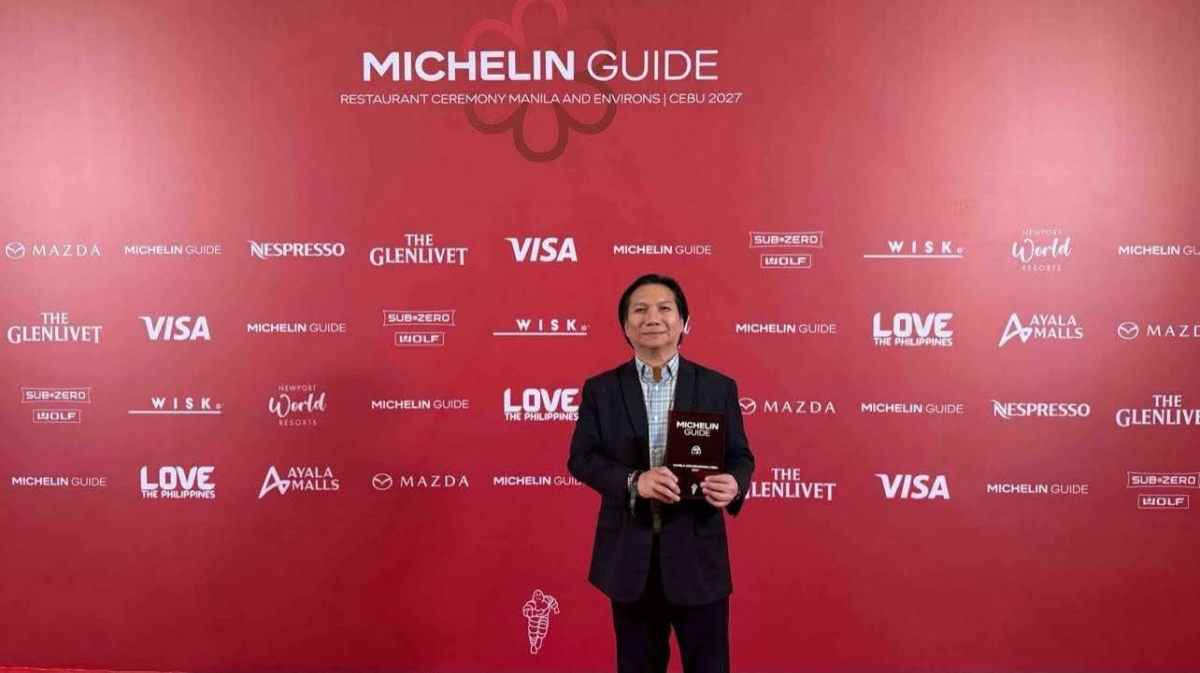
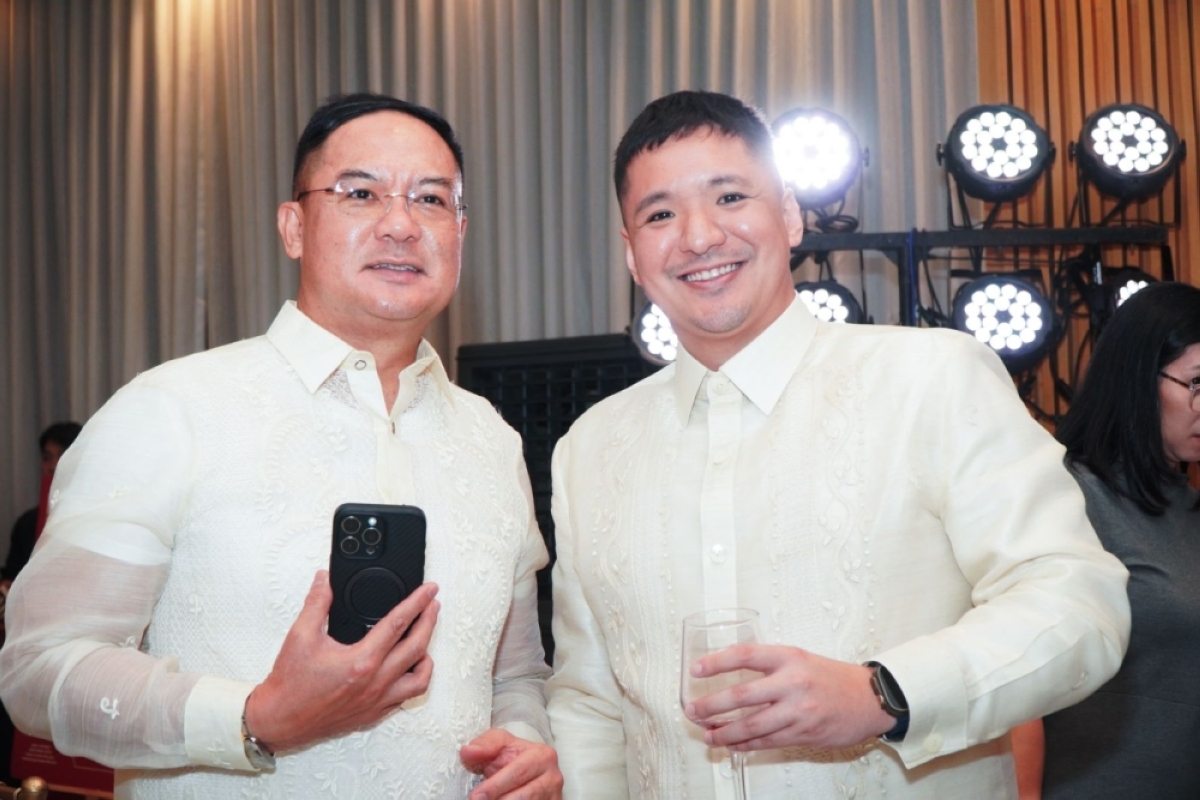
MANILA, Philippines — Butcher Boy has earned a Bib Gourmand distinction in the 2027 Michelin Guide Philippines, moving up from its Michelin-Selected status in the 2026 edition and joining a select group of restaurants recognized for serving quality food at accessible prices.  The recognition was announced during the official awarding ceremony at the Manila Marriott Hotel on Thursday, Oct. 29, attended by President Ferdinand Marcos Jr.  Butcher Boy was among only two restaurants promoted from the Michelin-Selected category to Bib Gourmand this year. The distinction recognizes establishments that offer good-quality food at reasonable prices.  Butcher Boy Philippines CEO Dino Chua received the award, marking another milestone for the restaurant, which has continued to establish its presence in the local dining scene.  The recognition follows the restaurant's opening of its new and expanded location at Alabang West Parade along Daang Hari Road in Muntinlupa City in 2026. Led by Chua, the move marked a new chapter for the brand, allowing it to reach more diners in southern Metro Manila while maintaining its signature contemporary Asian-fusion cuisine.  Originally founded by Michelin-starred chef Andrew Walsh of Singapore's acclaimed Cure, Butcher Boy built its following at its former Makati location before relocating to Alabang to accommodate a bigger dining space and connect with a wider community.  Its culinary approach combines Southeast Asian flavors with Western cooking techniques, offering dishes such as its signature chicken laksa dumplings, fried chicken bao, Asian tacos, pork adobo and a variety of steaks, alongside carefully crafted cocktails.  The chicken laksa dumplings were among the dishes highlighted by Michelin inspectors.  During the restaurant's grand opening, Marketing Head Aubrey S. Mojica described its concept as “where east meets west,” emphasizing that while the menu had been expanded, the restaurant remained committed to preserving the quality, atmosphere and dining experience that patrons had come to expect.  Mojica also underscored the importance of customer service, saying the restaurant's identity goes beyond its food to include the experience it provides to diners.  With its latest Michelin recognition, Butcher Boy strengthens its position in the Philippine dining scene, bringing its combination of Asian-fusion flavors, steaks and accessible dining to the Alabang community.  Butcher Boy is located at Alabang West Parade, Daang Hari Road, Muntinlupa City. For reservations, call 0939-868-0531.

YOUR NEWS, OUR NETWORK.

Do you have Great News you want to tell the world?

Be it updates about your business or your community, you can make sure that it’s heard by submitting your story to our network reaching hundreds of news sites across 6 verticals.